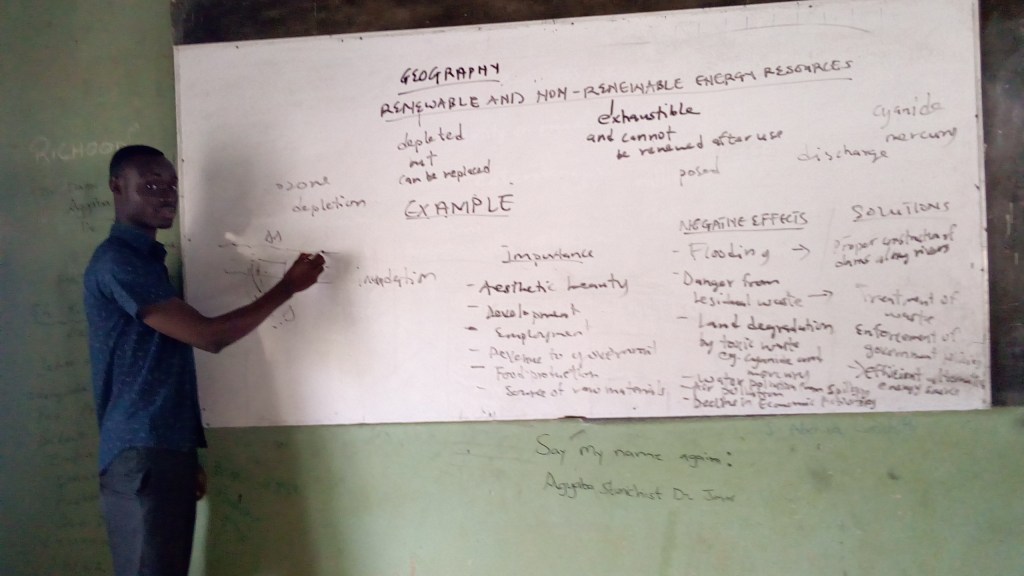
At STARS ENTREPRENEURSHIP TRAINING we discussed:
SOLUTIONS TO THE NEGATIVE EFFECTS OR PROBLEMS OF EXPLOITATION OF RESOURCES:
1. GOVERNMENT POLICY ENFORCEMENT to ensure treatment of waste; and fining culprits of oil spillage and toxic waste release into the Environment.
2 . ALTERNATIVE EFFICIENT ENERGY SOURCE which are cheaper and emits less greenhouse gases such biogas should be encouraged over charcoal and firewood.
3. PROPER CONSTRUCTION OF DAM along water bodies to prevent flooding.
4. EDUCATION BY ALL on ways of putting off appliances to conserving hydro-electric power.
5. PROTECTION OF VEGETATION by protecting forest reserves, Farmlands, preventing illegal mining and unauthorized construction activities.
General Objectives: :
1. distinguish between renewable and non-renewable energy
resources.
2. explain the importance of energy resources.
3. describe the negative effects of exploitation of energy
resources on the environment.
IMPORTANCE OF ENERGY RESOURCES
1. They serve as a source of employment.
2. They are source of raw materials.
3. Source of government revenue.
4. Facilitate national development.
5. Lead to infrastructural development.
6. Serve as basis for food.
7. Source of aesthetic beauty that promotes tourism.
NEGATIVE EFFECTS OF EXPLOITATION OF ENERGY RESOURCES ONTHE ENVIRONMENT
1. Flooding of lands as a result of the construction of dams across
rivers. This affects the economic activities of the communities.
2. Danger posed by the disposal of residual waste.
3. Land degradation through dumping of toxic waste.
4. Pollution due to spillage of oil, discharge of petroleum products
into drains.
5. Air pollution as a result of emission of carbon dioxide into the
atmosphere through charcoal burning, oil refining etc.
6. Change of economic activities as a result of inundation of land by
water from a dam.
TYPES OF ENERGY RESOURCES:
RENEWABLE RESOURCES:
are the resources of nature that can be
depleted over time but can be replaced
through natural forces and human
efforts in the long run.
E.g. forest, water bodies, solar.
NON-RENEWABLE RESOURCES are
exhaustible and cannot be renewed
after use.
E.g. petroleum, bauxite, natural gas.
EXERCISE:
1.Write on ways to conserve energy in
the home
2. Categorize energy resources from
the map of Africa into renewable and
non-renewable resources.


 JUST COMMIT
Leave a comment